China’s Surveillance State Is Losing Its Grip

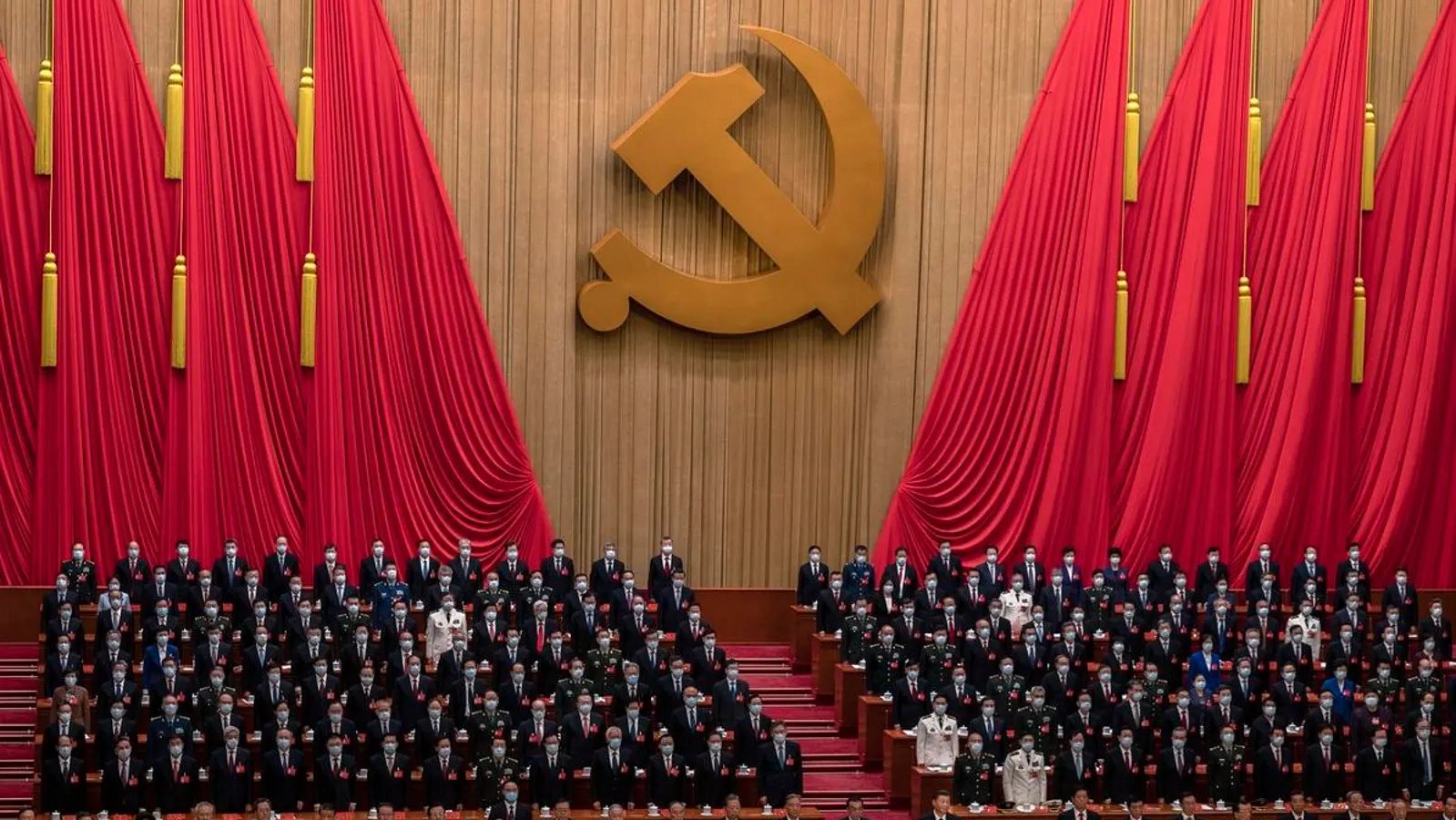
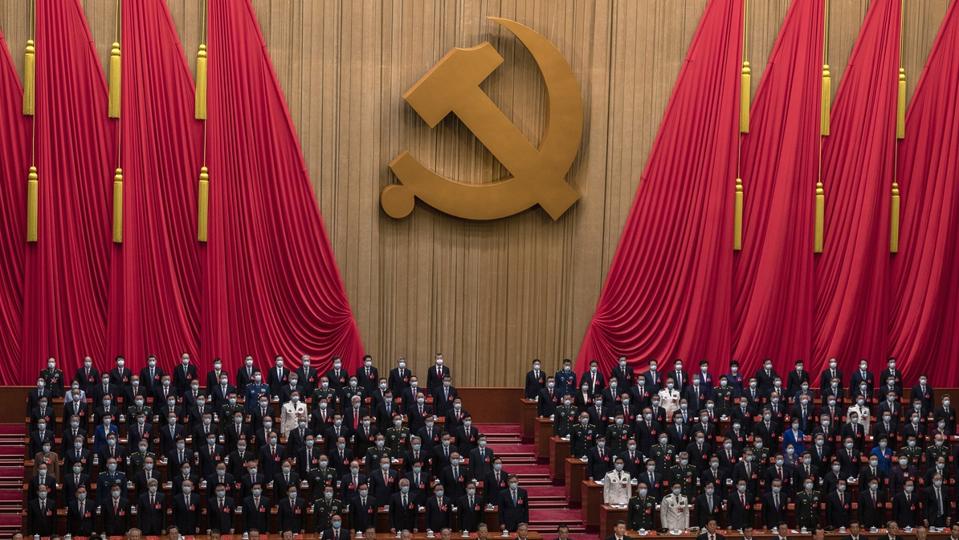
BEIJING, CHINA - OCTOBER 22: Chinese President Xi Jinping, bottom centre, and senior members of the ... [+] government stand for the national anthem at the end of the closing session of the 20th National Congress of the Communist Party of China, at The Great Hall of People on October 22, 2022 in Beijing, China. China's Communist Party Congress is concluding today with incumbent President Xi Jinping expected to seal a third term in power. (Photo by Kevin Frayer/Getty Images)
In China, the government’s expansive surveillance system has long been a tool for maintaining control, a sprawling network designed to monitor the activities of over 1.4 billion citizens. Advanced technologies like facial recognition cameras, artificial intelligence, and big data analytics are embedded into daily life, ensuring that almost no action goes unnoticed. Yet, this unprecedented surveillance network is now revealing cracks—cracks that are being exploited by the very people tasked with maintaining it.
In what might seem like a plot twist in a dystopian novel, insiders within China’s surveillance apparatus have found ways to profit from the system, Wired reports. These government employees and contractors, with privileged access to the vast treasure troves of personal information, are selling this data on the black market. Sensitive details such as real-time locations, banking records, and passport scans are now being peddled on platforms like Telegram. Some of this data is sold for just a few dollars, while more comprehensive profiles command higher prices, paid in cryptocurrencies to ensure anonymity.
China’s surveillance state is unrivaled in its reach. With an estimated over 700 million cameras installed across the country, many equipped with facial recognition, every public space is potentially a site of monitoring. Mobile apps used daily by millions—such as WeChat and Alipay—are tied directly to government databases, tracking transactions, communications, and movement. Even the Social Credit System, a hallmark of China’s control measures, uses this data to reward or penalize citizens based on their behavior.
From urban centers to rural villages, the system touches every corner of Chinese life. Officially, it is framed as a necessity for public safety and political stability. Yet, the staggering amount of data collected has created a tempting resource for those with access—and questionable motives.
A Paradox of Control: The Chinese Surveillance State
The rise of this black market lays bare a paradox at the heart of China’s surveillance state. Built to tighten the government’s grip on its population, the system is being turned against its creators, used to undermine the very control it was meant to enforce. Citizens who might have trusted—or at least resigned themselves to—the surveillance network now find their personal information being sold to the highest bidder.
FBI Warns iPhone And Android Users—Stop Sending Texts
Microsoft’s New Update—Bad News Confirmed For 400 Million Windows Users
Smartphone Security Warning—Make These Changes Now Or Become A Victim
The implications go beyond China’s borders. Data theft knows no national boundaries, and the leaked information often finds its way into global criminal networks. For individuals and organizations outside of China, the potential consequences are just as severe, as Chinese surveillance data increasingly feeds into international cybercrime ecosystems.
The exploitation of China’s surveillance system is a stark reminder that no data, no matter how secure it seems, is entirely safe. While the Chinese Communist Party, or CCP, has built one of the most intrusive monitoring networks in the world, its failure to prevent insiders from monetizing this system reveals a critical vulnerability. For all its technological sophistication, the system’s reliance on human operators has become its Achilles’ heel.
As China expands its surveillance capabilities, it faces a growing challenge: how to maintain the integrity of its data infrastructure while addressing internal corruption. Without meaningful reform, the cycle of data exploitation will likely continue, eroding public trust and exposing millions of citizens to harm.
Join The Conversation