digital forensics, deepfakes, and the death of trust in visual evidence
A claims adjuster reviews damage photos. A detective examines cell phone video. A family law attorney presents screenshots in a custody hearing. None of them can confirm with certainty that what they're looking at is real.

A claims adjuster reviews damage photos. A detective examines cell phone video. A family law attorney presents screenshots in a custody hearing. None of them can confirm with certainty that what they're looking at is real.
That's not hypothetical. That's 2026.
AI-generated images and video have reached a level of quality where even trained professionals can't reliably tell the difference. UK loss adjuster McLarens saw a 300% spike in suspected fake documents in early 2023. Allianz reported a similar jump. Courts are scrambling to update evidence rules. And the detection tools most people are counting on? They don't work the way anyone hopes they do.
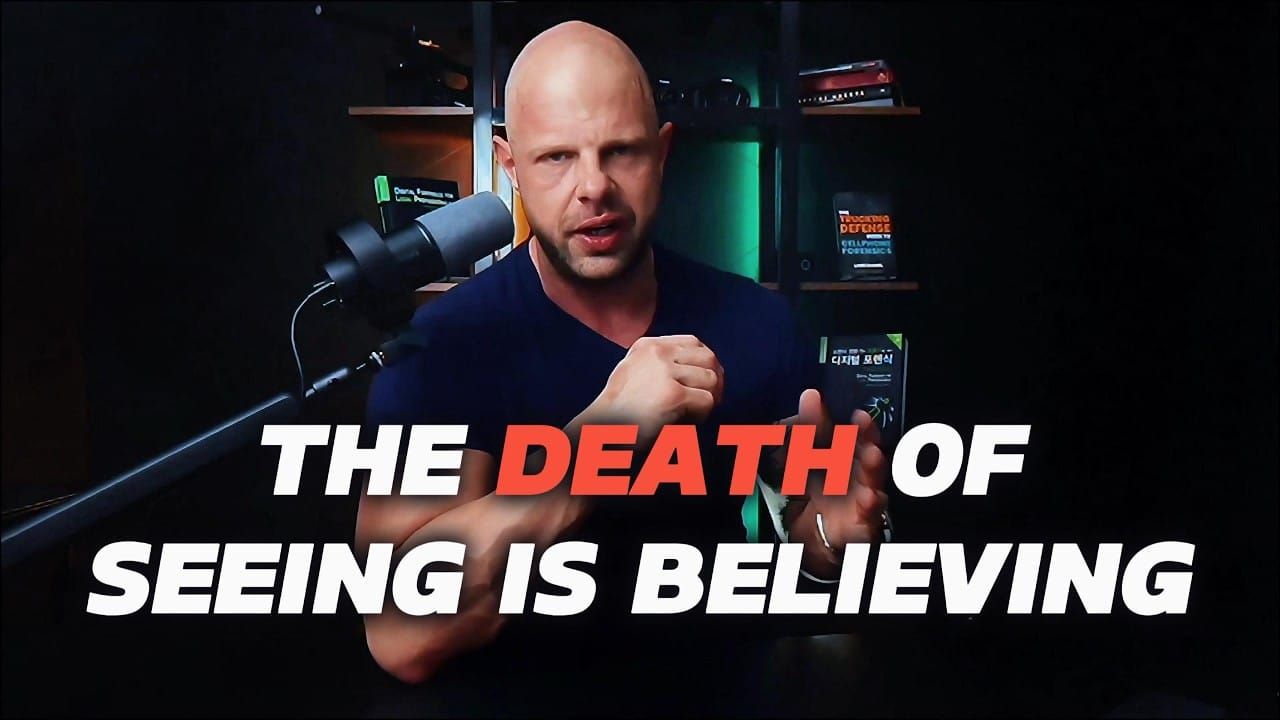
In this video I break down what's actually happening with visual evidence right now, what's coming, and what the only consistently reliable method looks like in real case work after 16 years of examining digital evidence.
Spoiler: it's not the file. It's the device.
Topics covered: